


Our Experience
After abalone diver and founder Shanan Worrall experienced the loss of two mates to white shark attacks in Western Australia. Shark Eyes was created with the intention of contributing to keeping our ocean community safer, without harming the ocean along the way.
"Whilst nothing is fail safe, we believe the gold standard in shark safety is to mitigate risk using personal mitigation...
Our Deterrent Concept: "The Eyes"
Shark deterrents come in many forms: electric, magnetic, and visual, and costs can be high. Shark Eyes takes a simple affordable, nature-inspired approach: a visual deterrent based on an ancient concept. By mimicking large “false eyes,” our solution taps into nature’s own wisdom, creating a versatile, effective way to help keep sharks at bay.
Intentional Design
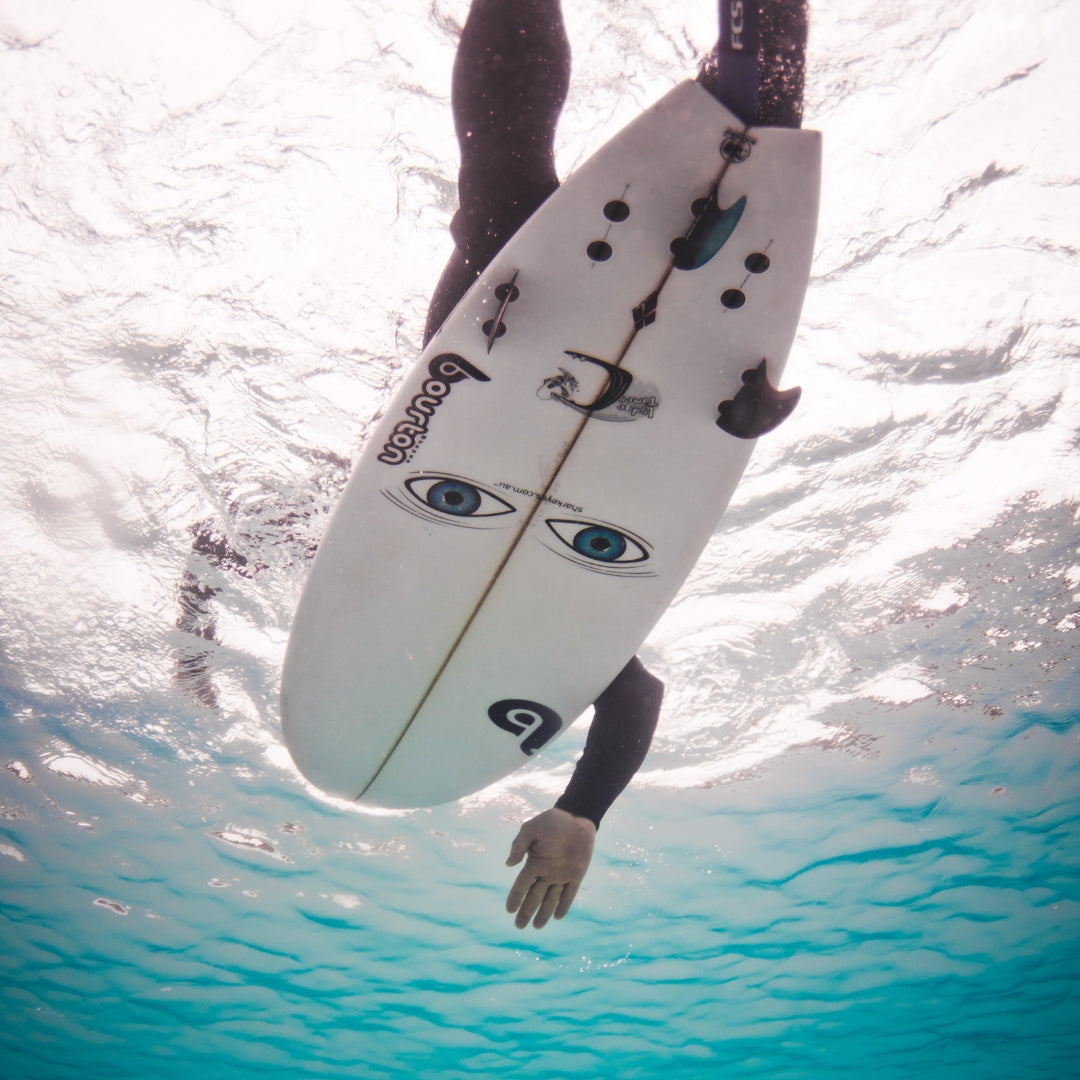
We designed Shark Eyes to look distinctly different from anything a shark considers prey, with colour, contrast and shape optimised for distance. The eyes appear more human than seal or whale, carrying no association with food. Blue light travels further than any other colour underwater, enabling maximum effective range. Knowing sharks use the edge of visibility during early investigation, distance was a key design priority. We recommend placement that allows distinct contrast between the deterrent and surrounding surface.

Seamless Versatility
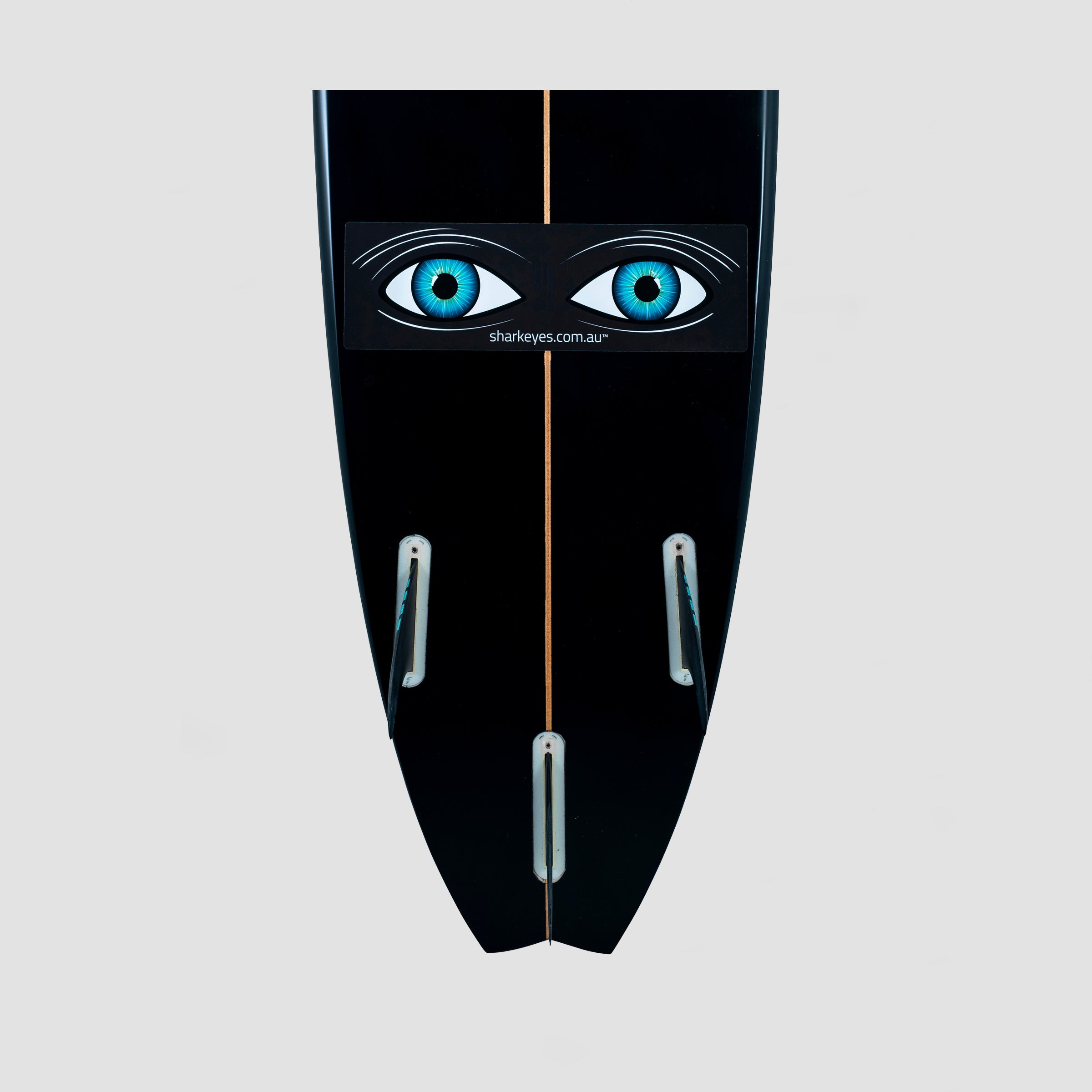
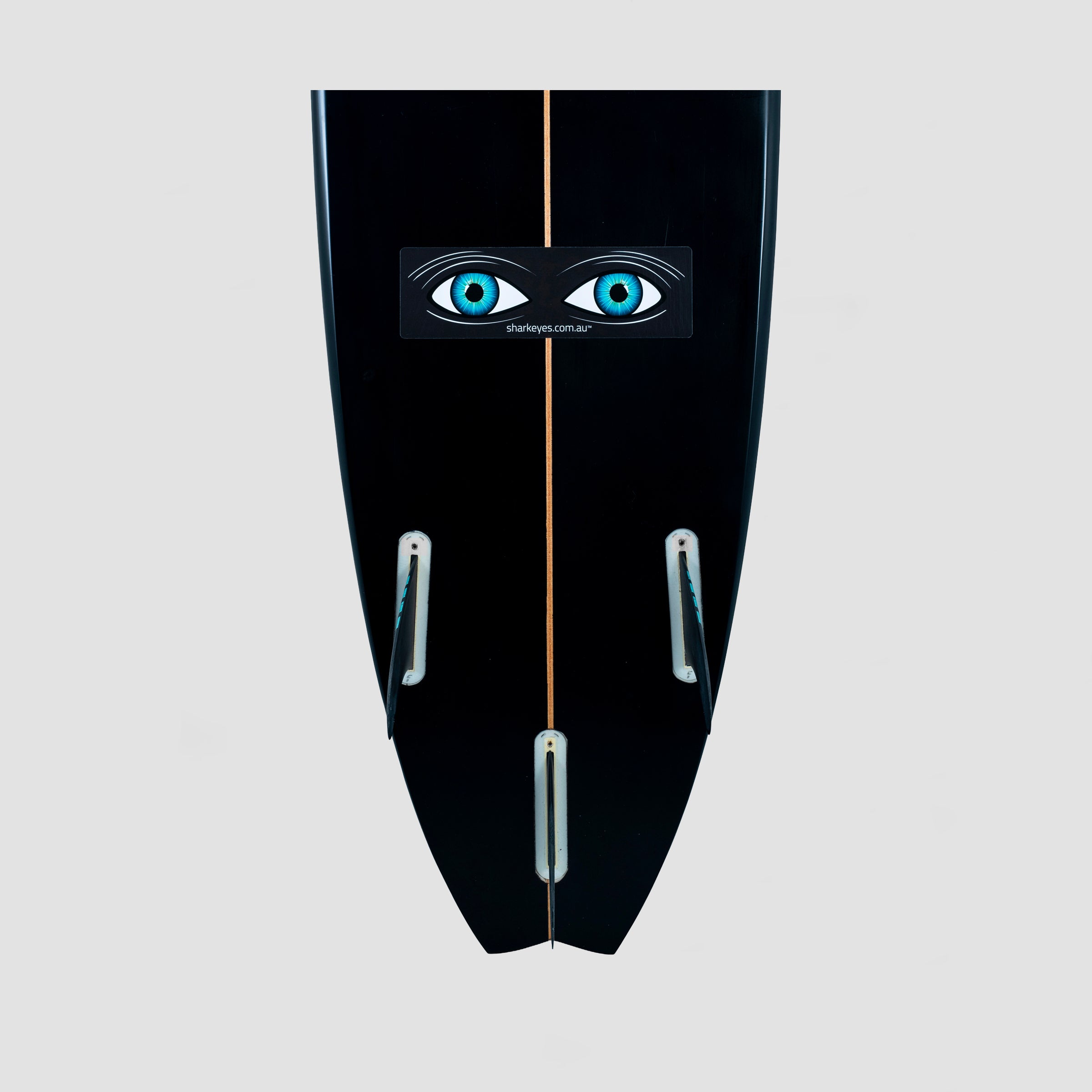
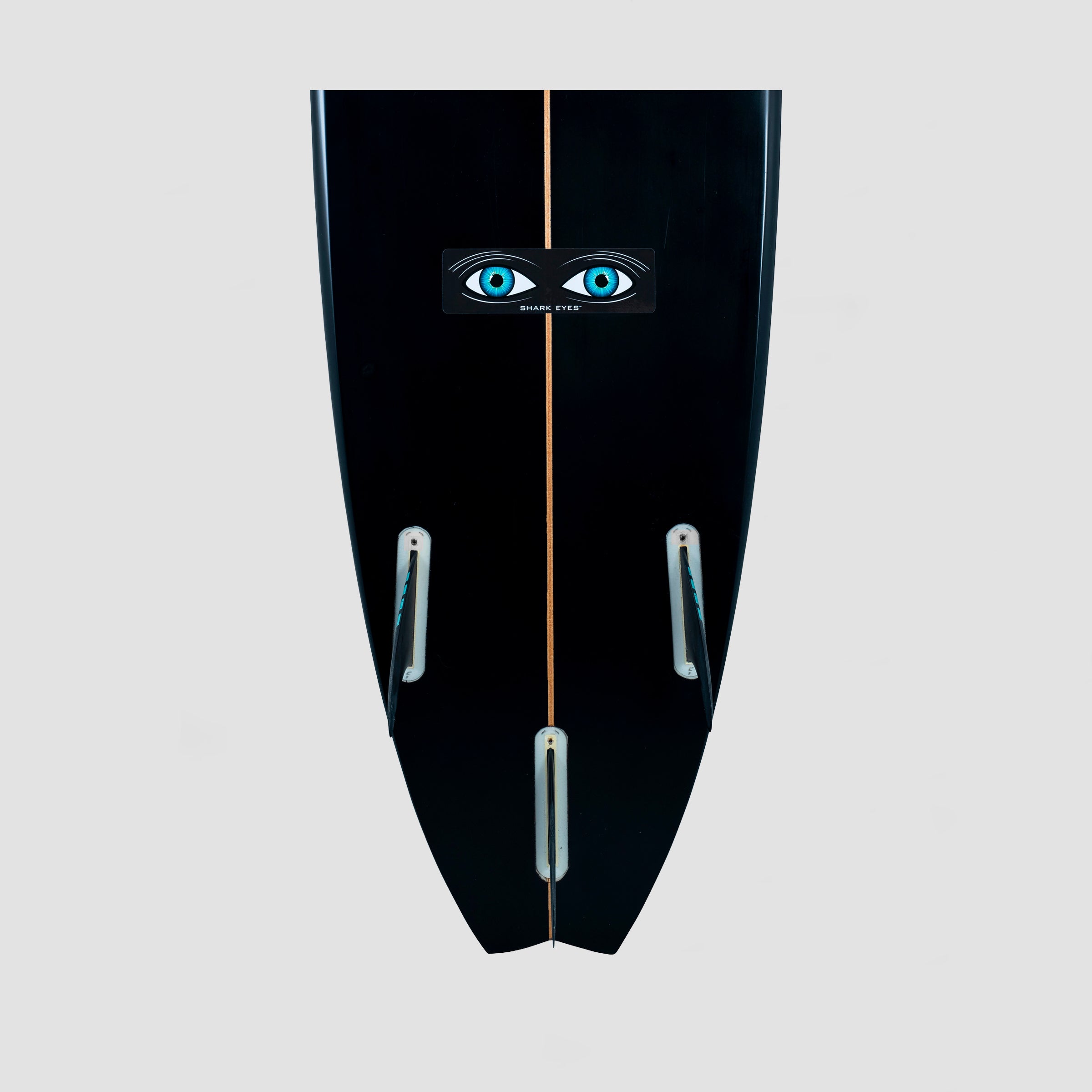
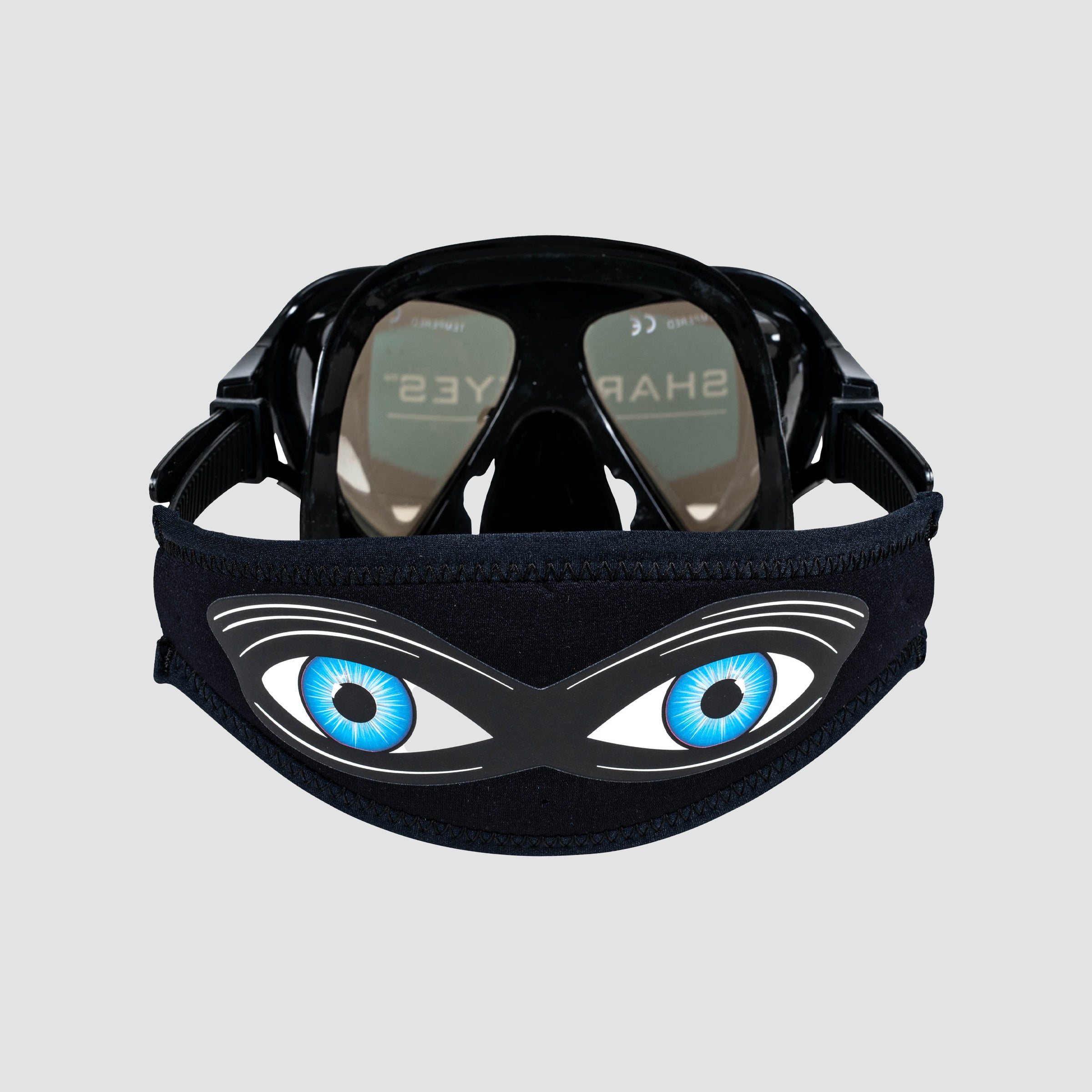
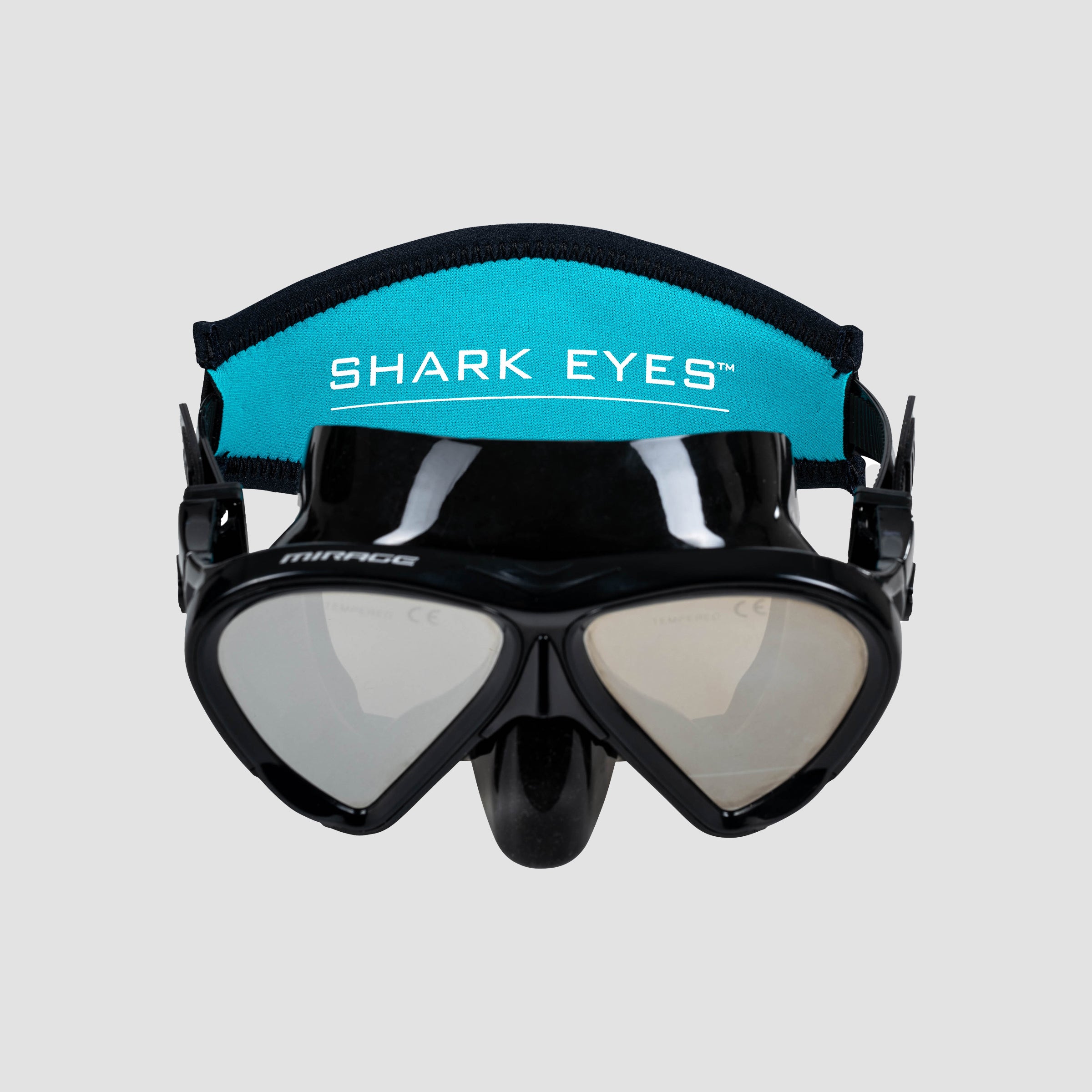
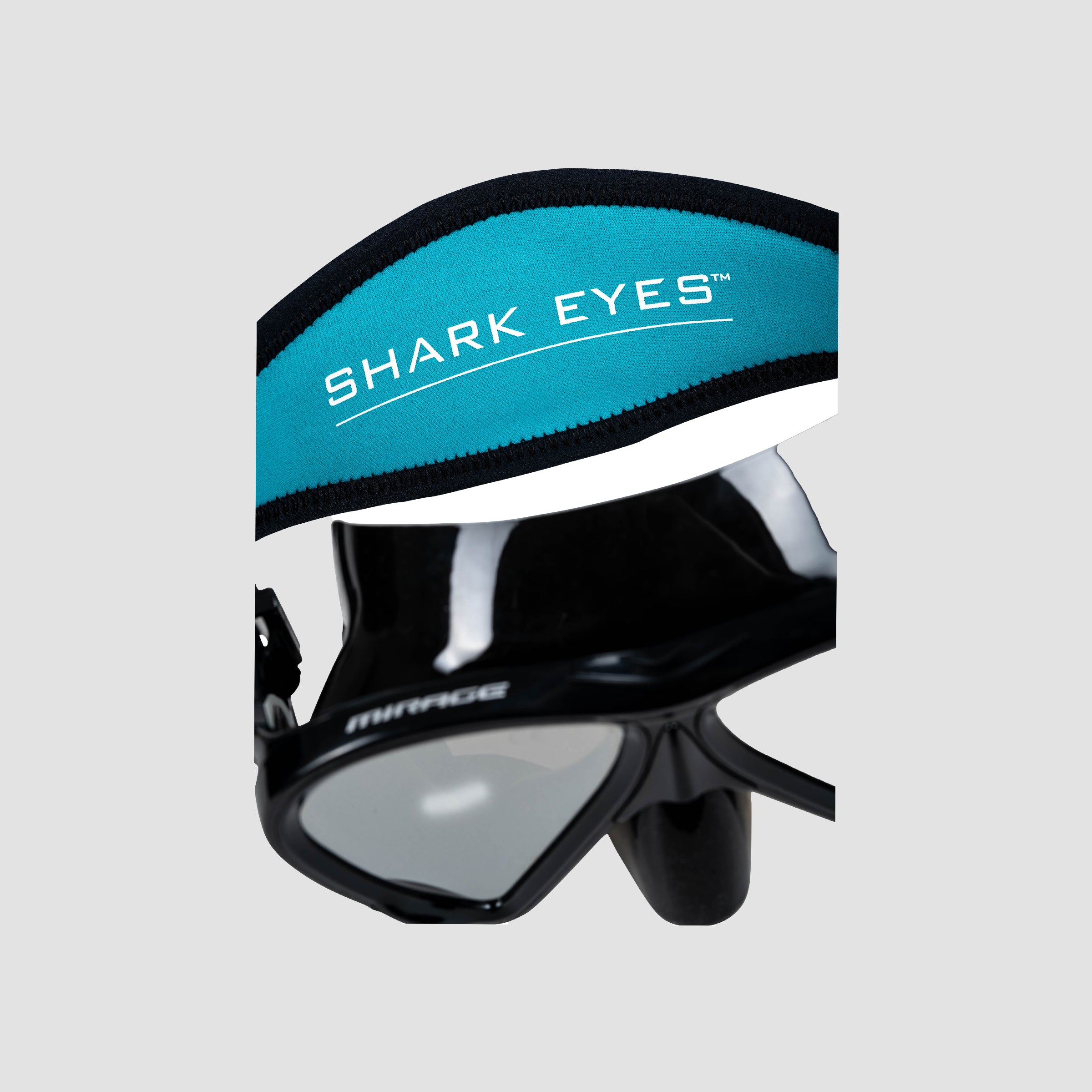
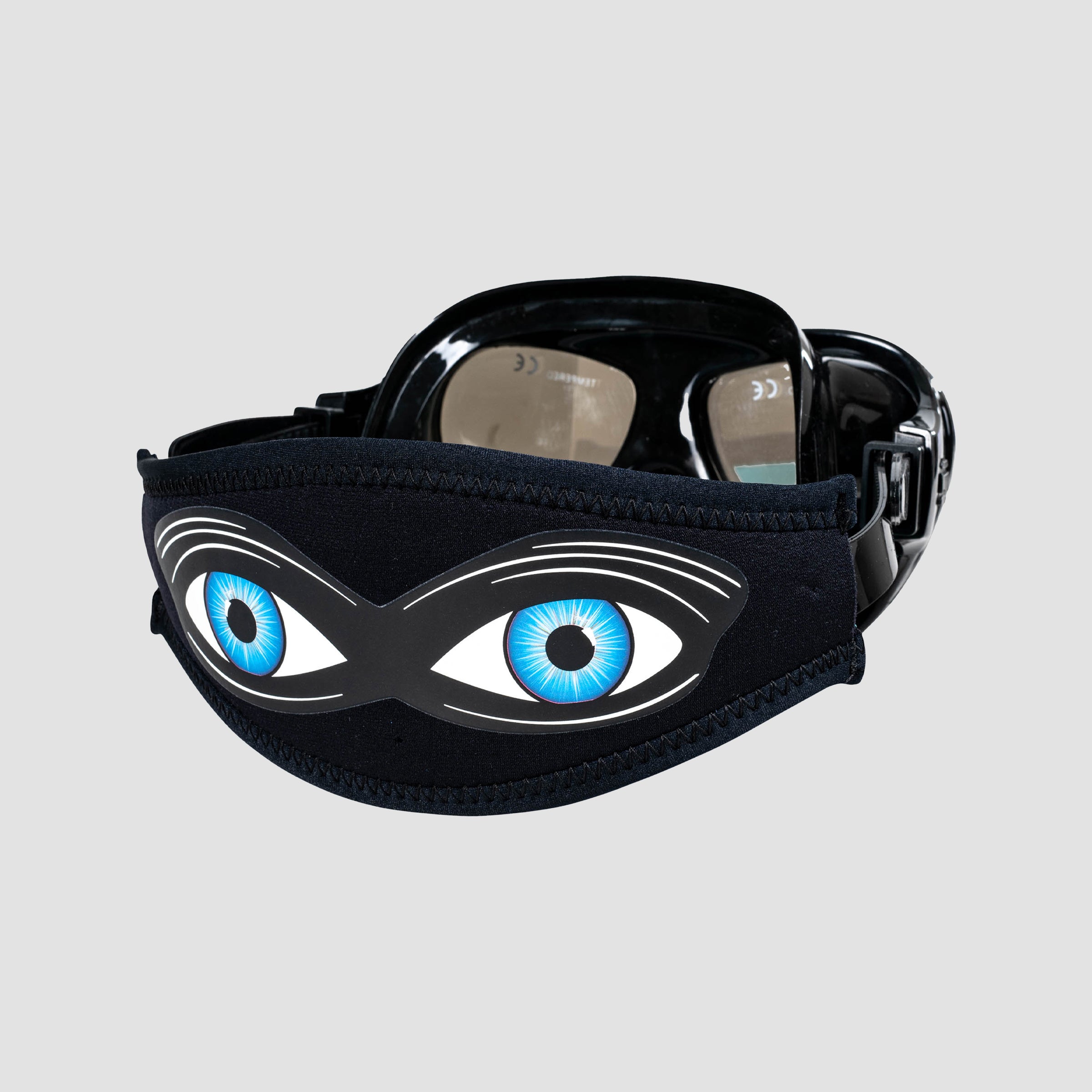
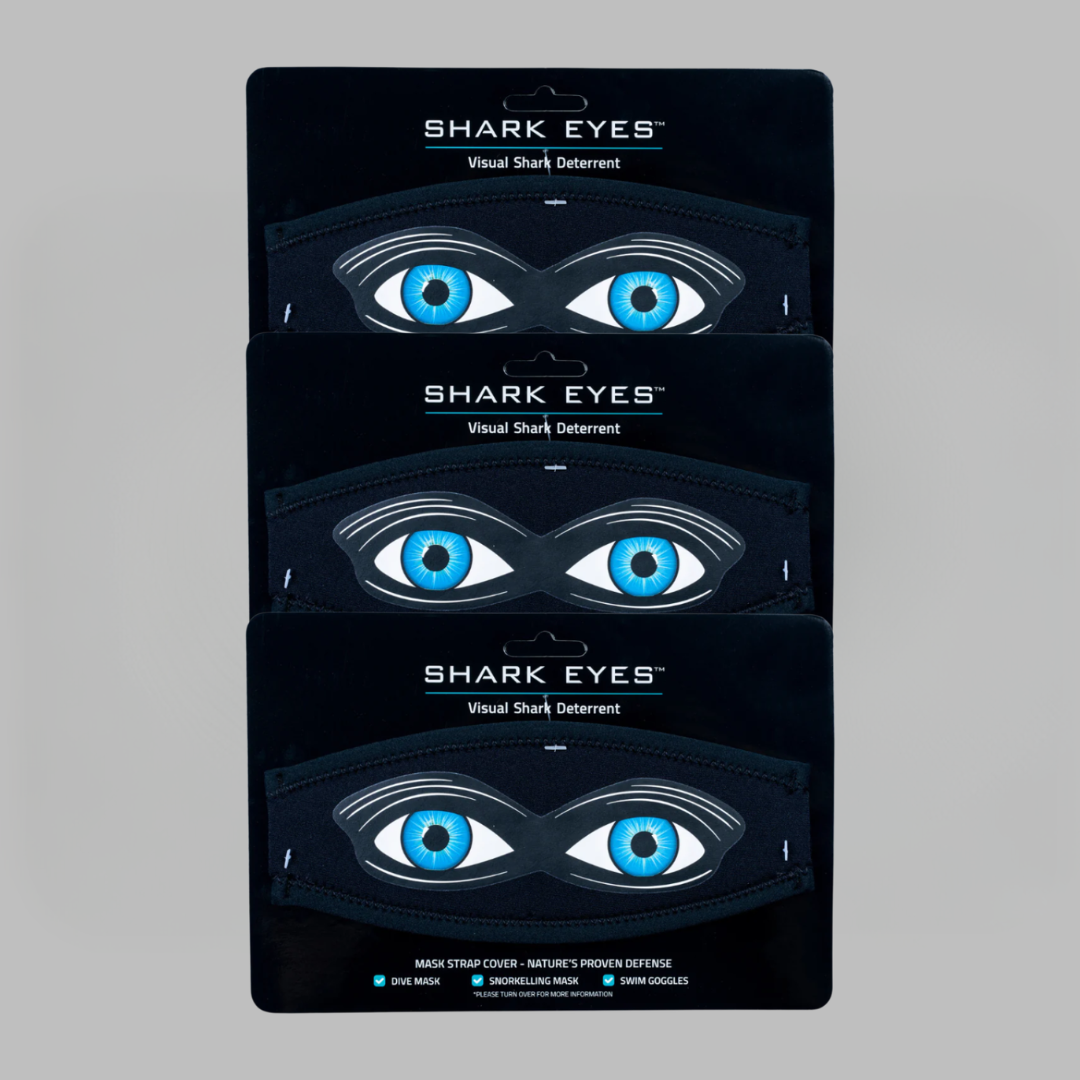
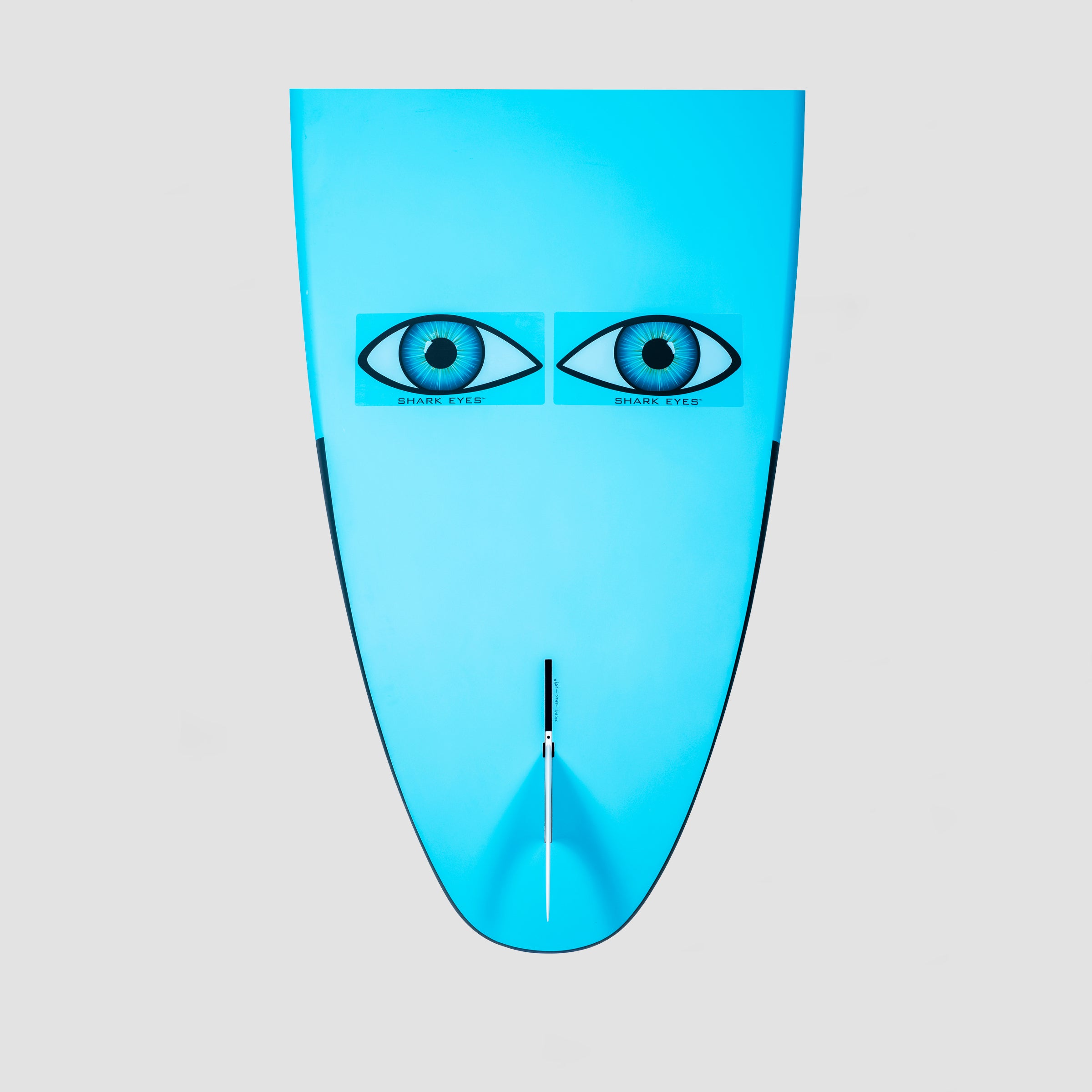
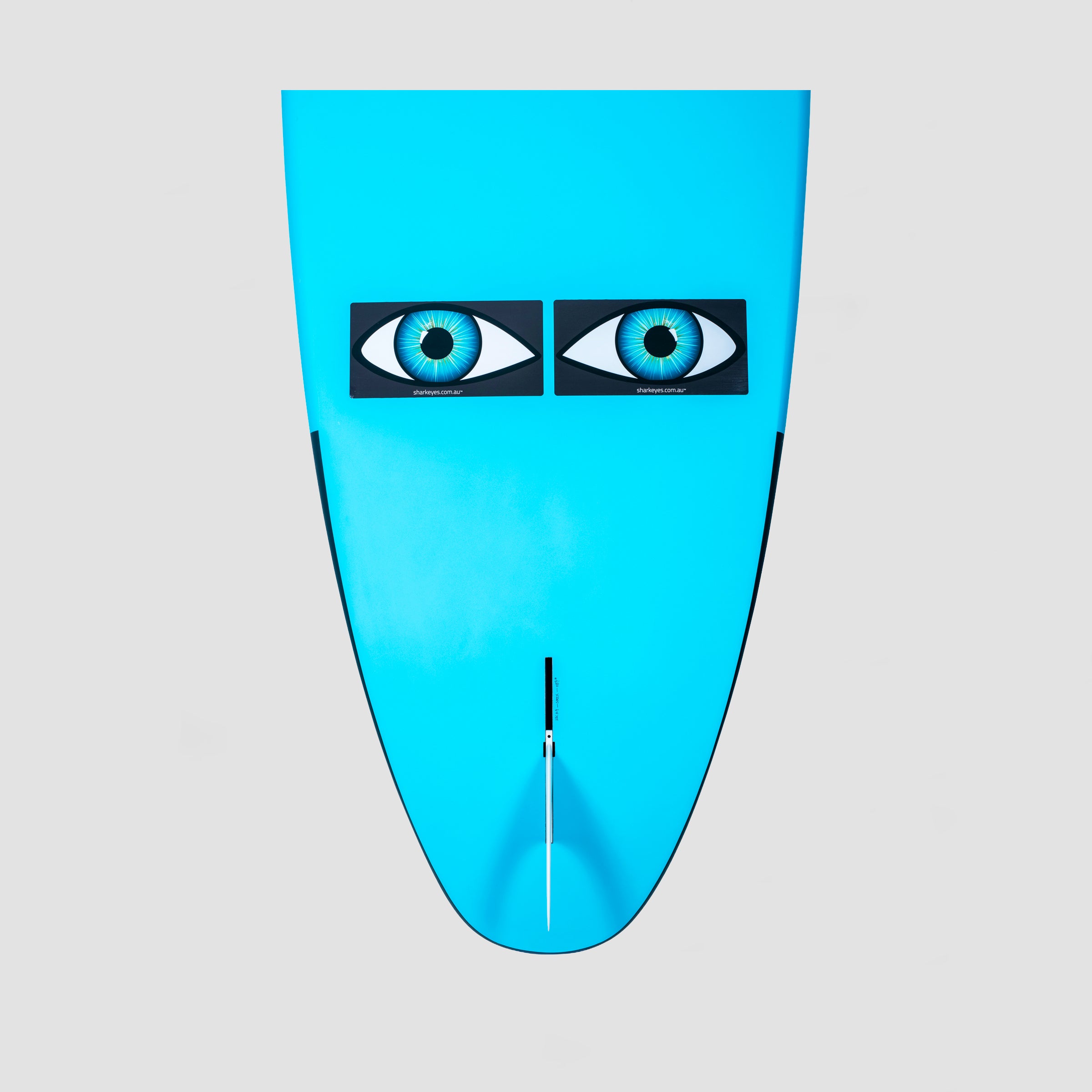
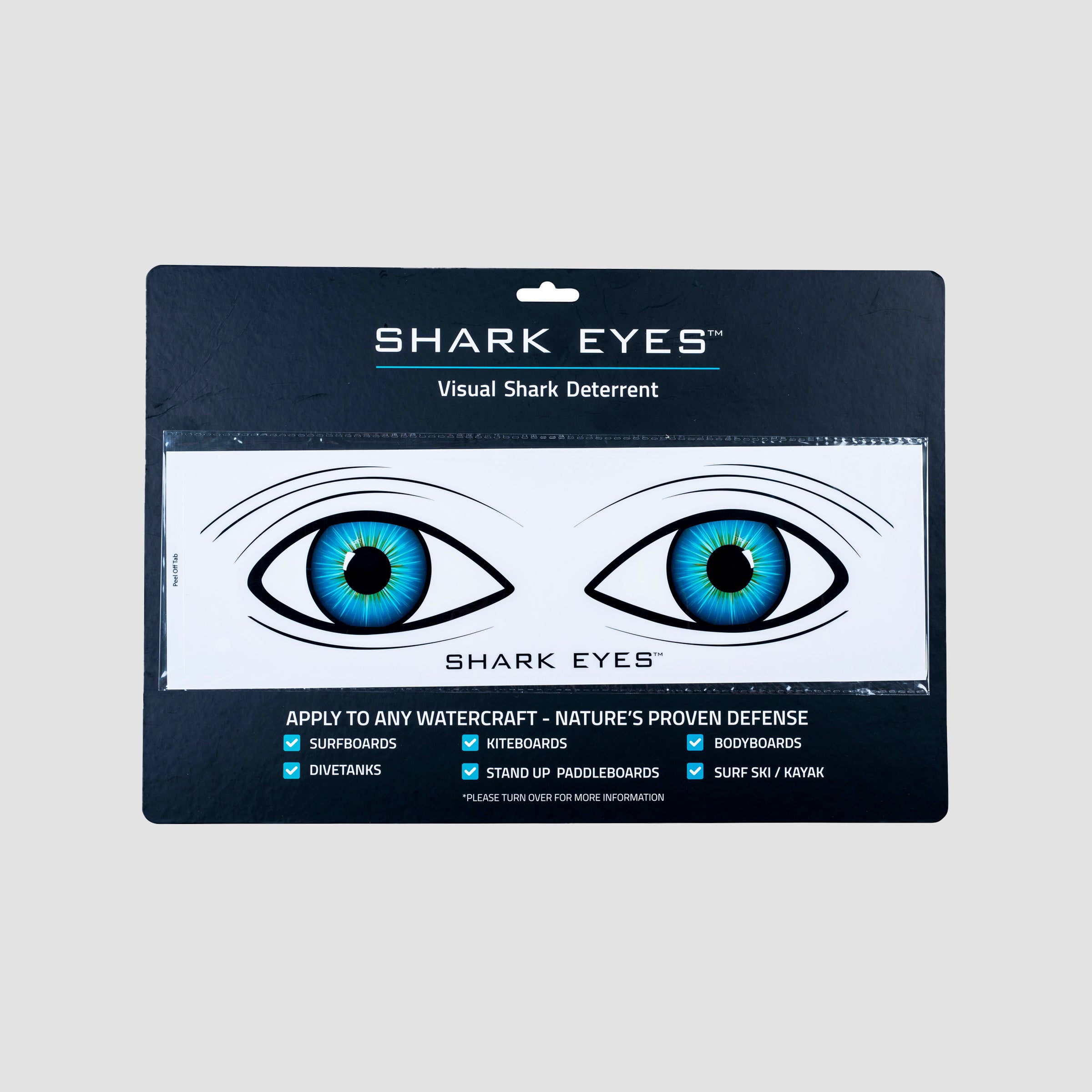
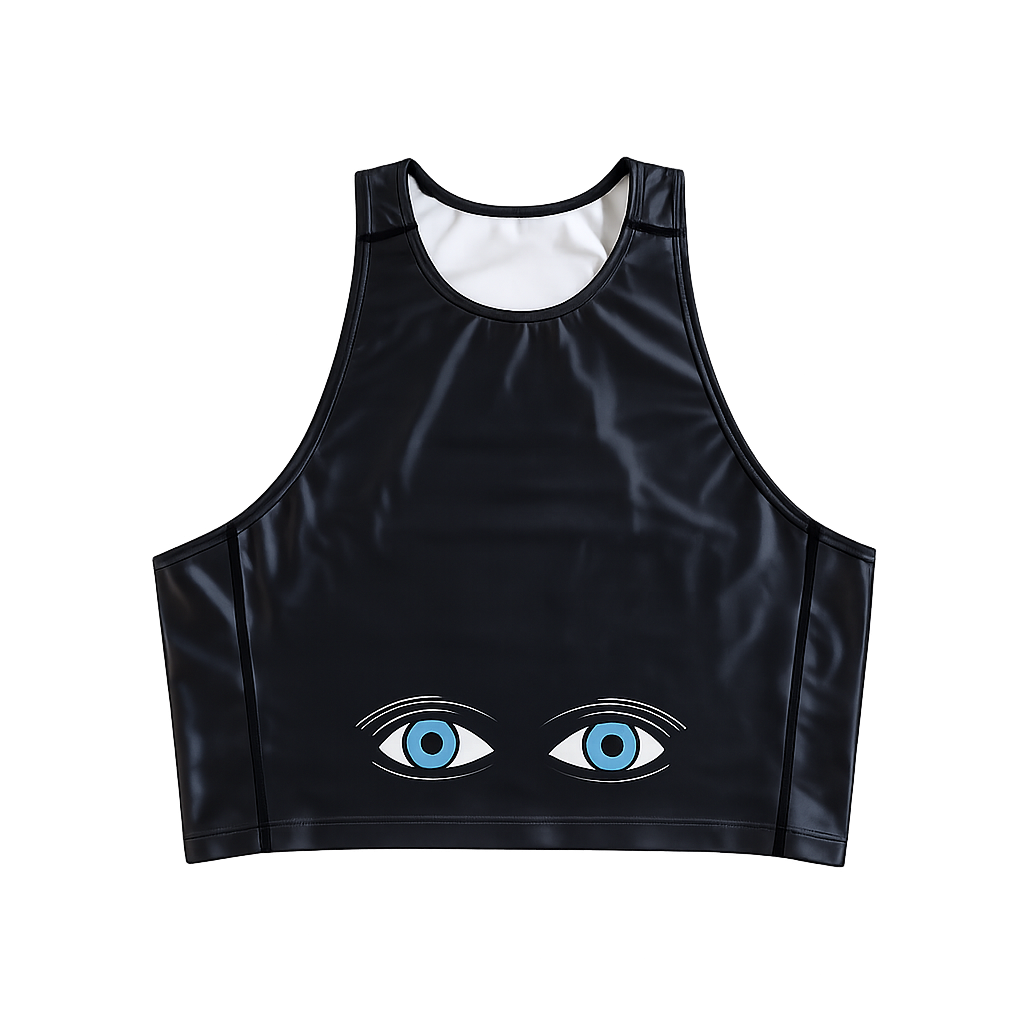
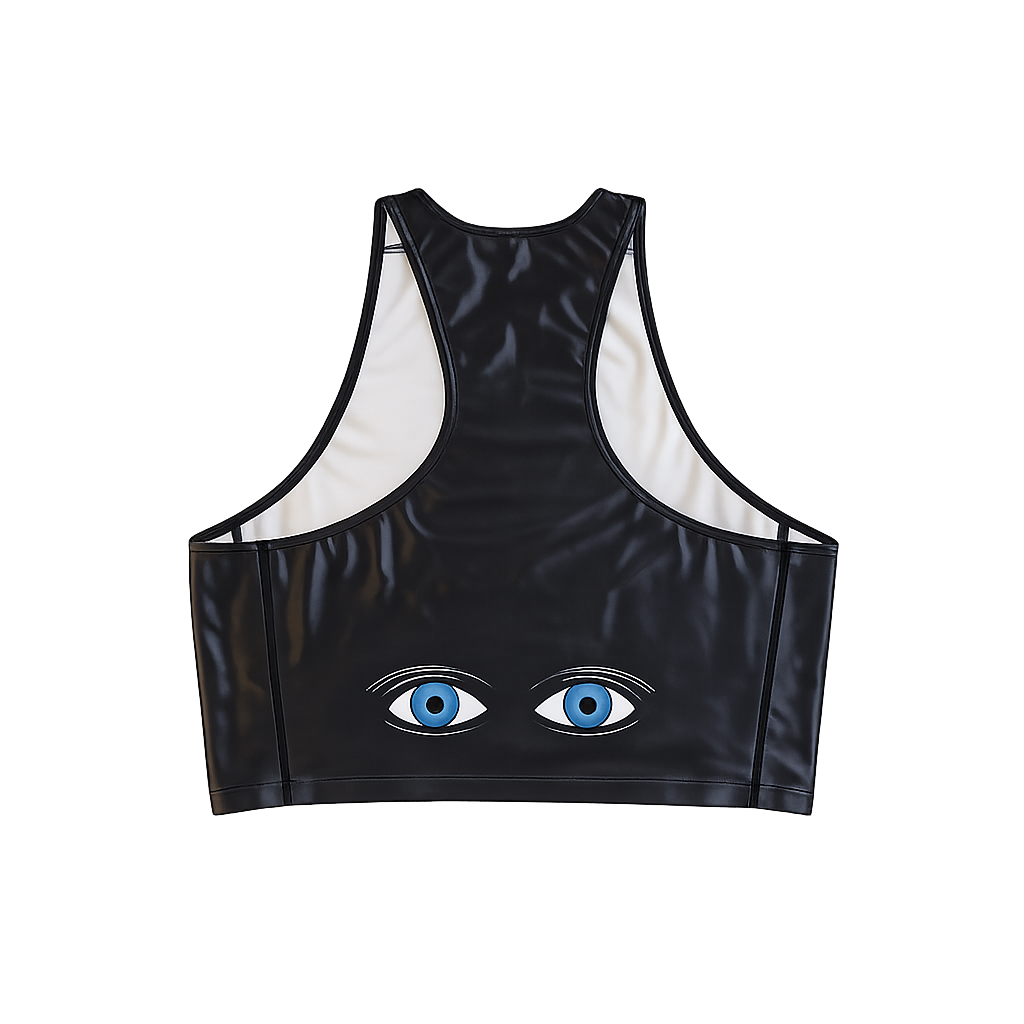
Choose the application that suits your activity. Stickers for the underside of surfboards, bodyboards, SUPS and kayaks. Mask straps, tank covers and wetsuits featuring the deterrent are designed to watch the back of divers beneath the surface. Oh, and if you don’t want to spend the twenty bucks? Go get creative with a marker. This is about keeping our ocean community safe.

Non-Invasive, Personal Mitigation
We’re passionate about the idea of non-invasive mitigation. Where we can keep people safe without hurting the ocean in the process. We don’t pretend to have all the answers, or a bulletproof solution - that doesn’t exist in the wild, at least not yet. What we do have is something of real value you can use now to be proactive about your safety, that is backed by some of the most dedicated waterpeople on the planet.
We know that government mitigation measures can only protect a tiny portion of the coast, so we consider personal shark deterrents to be a sensible part of our community response to increased shark interactions.
How do the eyes work?


Sharks are visual hunters
Sharks have far better eyesight than we once thought. Larger species depend heavily on visual cues and tactically exploit low light conditions where they hold the advantage.
Countless firsthand accounts suggest sharks respond directly to line of sight and are acutely aware of where our eyes are.
In poor visibility, a visual investigation phase still takes place, just compressed, forcing quicker decisions. Given what we know about shark caution and self preservation, we believe there is merit in both long range and close scenarios to using visual deterrent tech.
Deep dive below with a selection of published papers that have explored the topic.
- Sharks came significantly closer and slowed when eye contact was interrupted — evidence they are sensitive to being observed
First study to map how vision, lateral line, electroreception, and olfaction integrate across the full hunting sequence
- Blacktip sharks rely heavily on vision for accurate strikes — success dropped significantly when vision was blocked
- Without vision, prey detection was limited to within one body length
- Vision enables detection at distances up to tens of meters
3. Martin et al. (2005) - Predatory Behaviour of White Sharks at Seal Island, South Africa Journal of the Marine Biological Association of the UK 85:1121-1135 - in summary
White sharks use a visual "Gather Info" phase before deciding to strike or abort — demonstrating visual risk assessment during predation
4. Huveneers et al. (2015) - White Sharks Exploit the Sun during Predatory Approaches The American Naturalist 185(4):562-570 - in summary
White sharks reverse approach direction from morning to afternoon to keep the sun behind them — strong evidence of vision as a primary hunting sense

Element of Surprise
Large sharks are ambush predators, using the element of surprise for success, efficiency and self preservation. Removing that advantage significantly impacts their behaviour, a principle widely observed across nature. Even apex predators face real consequences from a hunt gone wrong, like a seal's claws damaging the eyes or gills, an injury that could threaten survival. This conflict between risk and reward defines predator behaviour and survival will always come first over a high risk strike. It has been widely observed amongst divers that sharks approach with stealth, often from behind, and when detected will turn away and return from another angle seeking the blind side.
Deep dive below with a selection of published papers that have explored the topic.
- Seals can evade sharks once detected due to superior manoeuvrability
- Tactical advantage is lost when surprise is removed
- Fur seals and sea lions easily avoided white sharks once visually detected
- Sharks rely on surprise because they lack the agility to capture alert, fleeing prey
- Attacks made from behind and beneath prey; bite scars concentrated on ventral regions
- White sharks "not agile enough to capture a fleeing, darting pinniped; hence, it generally attacks its prey by surprise"
- Foundational framework: animals assess and control predation risk through cost-benefit trade-offs
- Detection by prey fundamentally changes the predator's calculation — survival is increasingly prioritised as attack risk rises

Eyespots are used throughout nature
Hundreds of species use eyespots as an evolved defence mechanism. Evolutionary design takes no prisoners. If a feature doesn't serve survival, it won't endure millions of years of refinement. Eyespots create a false perception of size, suggest awareness and can redirect attacks toward less vital body parts. When you see this working across fish, insects, tigers and birds, and pair it with what we've witnessed about eye contact and shark behaviour, the logic behind Shark Eyes becomes clear. Australian scientist Dr. Neil Jordan asked a similar question in Botswana, painting eyespots on cattle to protect them from big cats. Over four years, across 2061 marked cattle, he lost zero animals. Biomimicry research has delivered remarkable breakthroughs and we've only just scratched the surface of what’s possible in this field.
Deep dive below with a selection of published papers that have explored the topic.
- 4-year study: 2,061 cattle, 14 herds in Botswana
- Zero eyespot-painted cattle killed vs 15 unpainted and 4 cross-marked
- First demonstration of eyespots deterring large mammalian ambush predators — supports the detection hypothesis
- Predators associate eye-like patterns with threat from their own enemies — eyespots signal awareness
- "Mona Lisa effect": concentric circles maintain apparent eye contact from all approach angles
- Damselfish grow larger eyespots when exposed to predators; mortality dropped from 60% to 10%
- Eyespots redirect attacks away from the head
Sharks have strong self-preservation instincts
Sharks avoid confrontation with larger or unknown animals because they risk injury or death. Despite the story often told, they are far from mindless hunters. For all their power, they have real vulnerabilities including their eyes, gills and electrosensing systems. 300 million years of survival is testament to the refinement sharks have developed in the game of risk and reward. We know sharks approach any target with a thorough investigation process. Prey is unaware, or prey runs, validating the hunter's instincts. A response of eye contact represents confidence and defiance, not fear - introducing doubt into the mind of the predator.
Deep dive below with a selection of published papers that have explored the topic.
1, Hawaii Department of Land and Natural Resources (DLNR) - Sharks Anatomy Guide
- Shark gills lack protective bony covering, leaving them vulnerable — injury can be fatal.
- Sharks cease predation when success drops to ~40% — first evidence of foraging cessation in any predatory fish
- Decision tree model: "Gather Info" before "Strike" or "Abort"
- Individual sharks show trial-and-error learning with elevated success rates
- Energy conservation (travelling) was the most frequent behavioural state; active searching the least
- Sharks continuously optimise energy through strategic decisions on timing, location, and conditions
4. ICES Journal of Marine Science (2025). "Influence of human and marine wildlife presence on white shark behaviour in nearshore areas." ICES Journal of Marine Science, 82(1).
- Retreat is less costly and less risky than physical engagement
- White sharks displayed avoidance behaviour with dolphins and other sharks
- Scavenging is "considerably more energy efficient" than active hunting
What are the ocean professionals saying?

Our testing and expeditions
Choose your deterrent















FAQs
Does the Shark Eyes Deterrent work in poor visibility conditions?
When water clarity is poor, it can be reasoned that the investigation process of any shark takes place in a compressed time period and distance compared to a scenario with great visibility. It poses the question, would sharks ignore one of their primary mechanisms for self-preservation and hunting success entirely when water clarity worsens? Logically, you would expect that investigation via their other sensory mechanisms takes place at distance whilst the visual inspection comes into play when it is allowedThis scenario also poses further thought. It can also be reasoned that without an extended opportunity to investigate a would-be target, the shark is going to be extra wary when entering close proximity without visual inspection. This is a future subject of our research project and certainly requires further investigation.
Does it attract sharks?
As the Shark Eyes Deterrent is intentionally unlike anything else found in the marine environment, there is no short term association of these eyes representing a food source. Conversely, there is millions of years of evolutionary process behind eyespots and eye contact evoking an embedded response of survival and as a defence mechanism.
Eyespots exploit a deep-seated psychological response in predator nervous systems that have been shaped by tens of millions of years of coevolution. In evolutionary terms, animals displaying prominent eyes are aware predators, entailing potential danger or larger than they appear. Given that eyespots have evolved independently across insects, fish, amphibians, appearing in roughly one in ten coral reef fish species alone, it is fair to say that eyespots have been validated as a tool for reducing predation and better survival outcomes.
Understanding this and knowing that self-preservation will always be the priority in the natural world, we can view the eyespots as representative of risk, rather than signifying an opportunity. As an unfamiliar shape in the water, i.e not the same as a seal, whale or other prey species that a shark would have encountered many times over it’s lifetime, we are an unknown object that warrants further investigation. In this scenario, we want to use all measures available to us that influence the shark to consider us a risky, unknown target and move on elsewhere.
Further reading
Hemingson, C.R., Cowman, P.F., Hodge, J.R. & Bellwood, D.R. (2021). Drivers of eyespot evolution in coral reef fishes. Evolution, 75(4), 903-914.
Merilaita et al. (2011) - "Number of eyespots and their intimidating effect on naïve predators" - Behavioral Ecology 22:1326-1331
Don’t sharks have poor vision?
Larger shark species that represent the majority of the threat to humans have varying degrees of visual acuity, but all use vision as an integral part of their foraging process. Great White, Tiger sharks and even Bull sharks have been shown to strongly depend on visual cues for both success and self-preservation.
What about Bull sharks?
Bull sharks are often found in conditions with lower visibility, and are adapted as such. They still depend on vision, but at a closer distance as clarity allows. They have advanced electrosensing capability with double the pores to white or tiger sharks, so they will logically look to this in early stages of investigation. Interestingly, there is considerable overlap in the rod and cone structure of the white shark and bull shark, but it is considered that the bull shark is even more dependent on contrast and likely completely colourblind. Bull sharks have significantly more electroreceptive pores (1,852) than white sharks (812) or tiger sharks (798), suggesting bull sharks require electroreception capabilities for success in turbid waters.
We have first hand experience of bull and tiger sharks redirecting at the last moment in poor visibility conditions, passing by at speed with pectoral fins lowered. These kind of experiences have given us confidence that the Shark Eyes Deterrent and eye contact still hold merit at short range.
It must be respected that limited visibility conditions will always represent a scenario of elevated risk for human / shark interactions due to the ability of the shark to remain undetected until it is in dangerous proximity. When one of us has highly attuned electrosensing capabilities and the other (us..) is relying purely on visual assessment to respond to the situation, it is certainly recommended to exercise extreme caution in these situations where we’re at an inherent disadvantage.
Why is non-invasive mitigation important?
We appreciate this is far from a simple topic, but ultimately we are choosing to pursue an outcome where we can protect human safety with minimal harm to the ecosystem. At the core of this discussion is the question of why we treat sharks differently to other species that are commercially or recreationally fished. There are some key points to consider.
Apex predators such as sharks are keystone species - the whole structure of the ecosystem is built around them. Change anything to do with these species for better or worse and you’ll see widespread and complex implications trickle down the entire food chain. Wolves in Yellowstone are the most famous example of this process, known as a trophic cascade. Where taking out something at the top had immense and unexpected consequences that rippled throughout the entire ecosystem. Affecting hundreds of species and even reshaping the landscape by redirecting the rivers that cut through Yosemite National Park.
Whilst these are complex and dynamic natural processes that represent a moving target to study, we know enough to see that sharks aren’t an optional part of a healthy ocean, so any tool for shark safety that contributes to coexistence can only be a step in the right direction. This is far from simple, but we hope that the Shark Eyes Deterrent can continue as a step in the right direction and that our ongoing research can continue to explore natural solutions of coexistence.
Further reading: Some animals are more equal than others: trophic cascades explained. Wolves in Yellowstone, How Sea Otters Save the Reef,
How has your testing process worked so far?
Methodology of our primary trial is evolving and yet to be finalised, but preliminary trials have been undertaken with two otherwise identical cylindrical objects, each with a very small amount of homogenised attractant (pilchards) inside. One side has the eyes, one side does not. With an aerial camera and up to four long deployment cameras on underwater tripods, we can observe the trajectory, speed and behaviour throughout an interaction.
Have you chummed the water during testing?
We are working hard to replicate the most natural interaction possible within the inherent limitations of our setup and resources. A more substantial amount of attractant in the water would likely make our research much easier, but we are consciously seeking to study sharks in a calm, investigative state - not an aggravated one that is unrealistic to the real world scenario of our product.
Who has funded your testing?
To date, all preliminary research expeditions have been entirely self funded by Shark Eyes. We have enough belief in what we’ve collectively seen underwater that we felt we had little choice but to begin this process off our own back. Testing has been undertaken with marine scientists Dr. Mark Porter, Dr. Kristen Perks and operationally conducted by Shark Eyes founder Shanan Worrall and Terra Australis team members Andre Rerekura and Nush Freedman.
Now that preliminary trials have been completed, we are progressing to the main body of research by engaging a behavioural specialist, evolving methodology and working to secure funding to complete the project.
What are Shark Eyes?
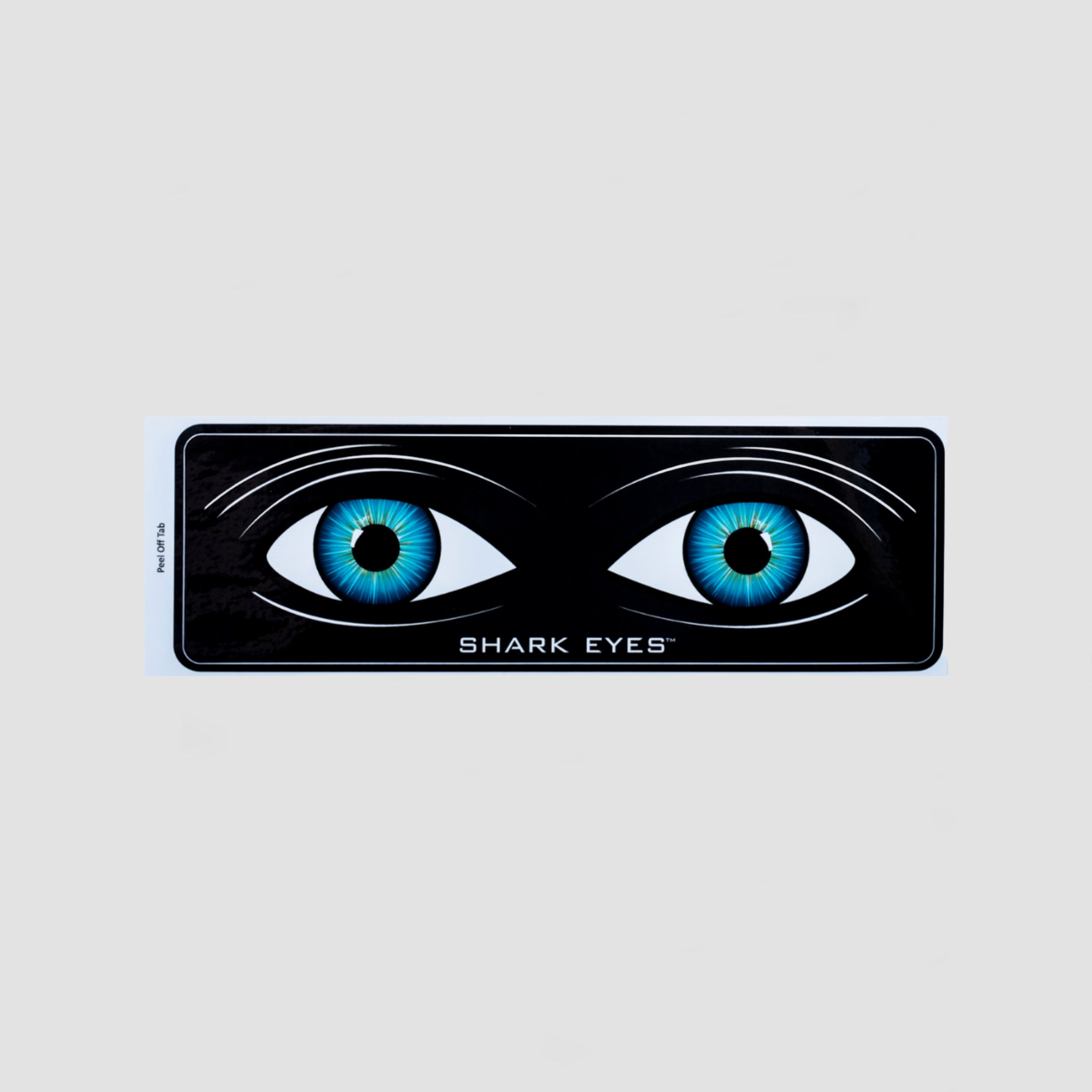
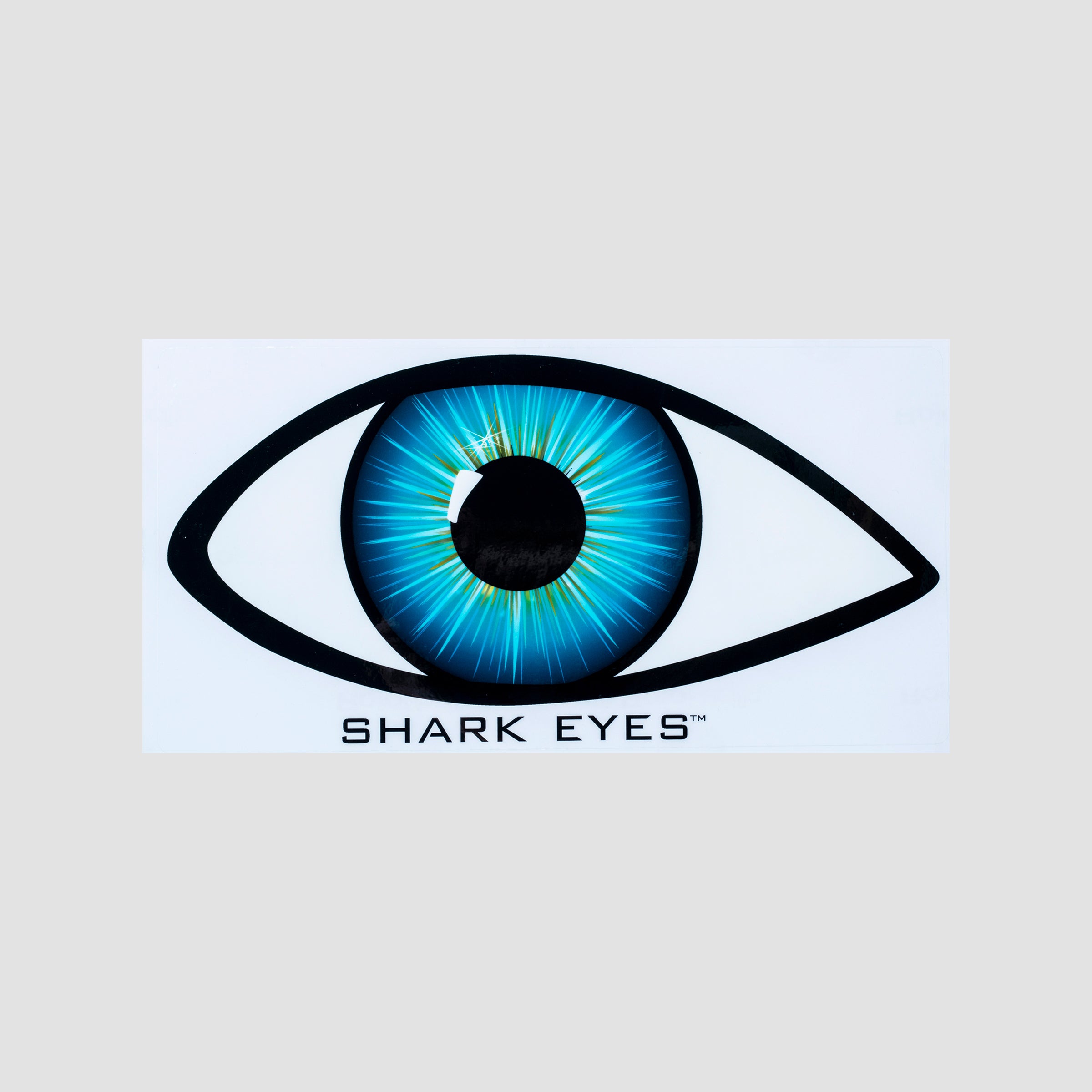
Shark Eyes are shark deterrent decals inspired by the eye spots that deter predators in nature. Applied to your surfboard, fins or dive equipment, they present a visual deterrent designed to trigger an instinctive avoidance response in sharks. The design replicates the warning markings found across predator-prey relationships throughout the animal kingdom.
Do Shark Eyes work?
Anecdotally yes, and early field trial data is encouraging. Our preliminary trials have shown a measurable difference in shark interaction responses when comparing objects with and without Shark Eyes. Independent peer-reviewed research is ongoing and we are committed to publishing findings as they are validated. No deterrent can guarantee absolute protection, but Shark Eyes add a meaningful layer of science-backed visual deterrence.
How do Shark Eyes work?
Shark Eyes work through biomimicry, replicating the eye spots that trigger an instinctive avoidance response in predatory sharks. When a shark investigates your board or equipment from below, the eye pattern creates the impression of being watched by a larger predator, causing the shark to abort its approach. The visual signal works at the instinctive level of shark behaviour, not as a learned response.
Do Shark Eyes stickers work?
The evidence is growing. Real-world user feedback has been consistently positive and early trial data supports the deterrent effect. Shark Eyes stickers apply to hard surfaces like boards and fins and are designed to remain visible underwater where a shark would first observe your equipment. As with any deterrent, they work best combined with sensible ocean awareness.
ETHICS & DISCLAMER
WARNING:
Shark Eyes Visual Shark Deterrent is designed to reduce risk, but cannot prevent all interactions with marine species, nor control your exposure to high risk situations that no deterrent can mitigate. It should not be regarded as a failsafe solution. When dealing with the complexity of wild animals, variable conditions and a dynamic, marine environment there is always an inherent risk assumed by entering the water. We encourage all water users to assess the inherent risk of their water activities and consider if Shark Eyes Deterrent technology is a useful addition to their shark safety toolkit. Always rely on local advice and never rely solely on a personal shark deterrent to guarantee safety in the water.
