Shark Eyes on ABC Radio South West: Shanan Worall Explains the Science Behind Visual Shark Deterrents
by Kalani Ord
With shark activity at heightened levels across Australia in 2026, including fatal attacks in Western Australia, Shark Eyes founder Shanan Worall joined ABC South West Mornings host Nadia Mitsopoulos to talk about the science behind shark deterrent decals. Listen to the full interview below and read the complete transcript.
Listen to the Interview
Originally broadcast on ABC Radio South West, Mornings with Nadia Mitsopoulos.
Full Transcript
NADIA: Can you just explain what your product is?
SHANAN: Yeah, no worries. Thanks for having us on. Firstly, you know, it seems just a little bit rough to just go straight into a product. So just, everyone's been impacted just recently and personally, I've probably felt those impacts as well, being in the water and having lost loved ones to shark attacks. So yeah, just condolences to those that have been affected just recently. It's always a pretty rough run.
And I guess that was the motivation of the product that we are basically starting to look into and scientifically test now, which is called Shark Eyes. And basically it's learning from nature. Biomimicry in nature. Eye spots have been around for a millennium. And I guess nothing in nature is non-essential. It adapts and evolves out of necessity.
Something as simple, and there are many species that already exist that use eye spots as a means of defence. And out of my background in abalone diving and specimen shell diving in WA, one thing that we did notice in spearfishing was that when we had interactions with sharks, they became more cautious when you'd make eye contact and make your presence known. They'd always try to close distance from your blind side.
So I had a couple of scientist friends, and we started looking into biomimicry in nature. And an amazing study that came out was absolutely remarkable. Professor Neil Jordan, who works with Taronga Zoo, he actually knew about biomimicry and eye spots as well. Over in Botswana in Africa, some of the farmers were shooting lions because the lions were taking down cattle. He actually went over to Botswana and he started painting eyes on cows' rumps.
And over the course of that four year study, he had three variables. He put crosses as a variable on their rumps. A third of them he put eyes on their rumps. And then a third left bare. And basically, 15 out of the 835 that were unpainted, that had nothing on their rumps, got killed by lions. There were four killed with crosses on their bum. But not one cow that had eyes on its bum was hit by the lions.
And so basically the concept is, and what scientists seem to think is, that if you can take the element of surprise away from an apex predator, basically instinctively it has the potential to change their behaviour and move on to a target that fits that risk assessment of being prey a little bit more. So that's the basis of the theory that we're testing.
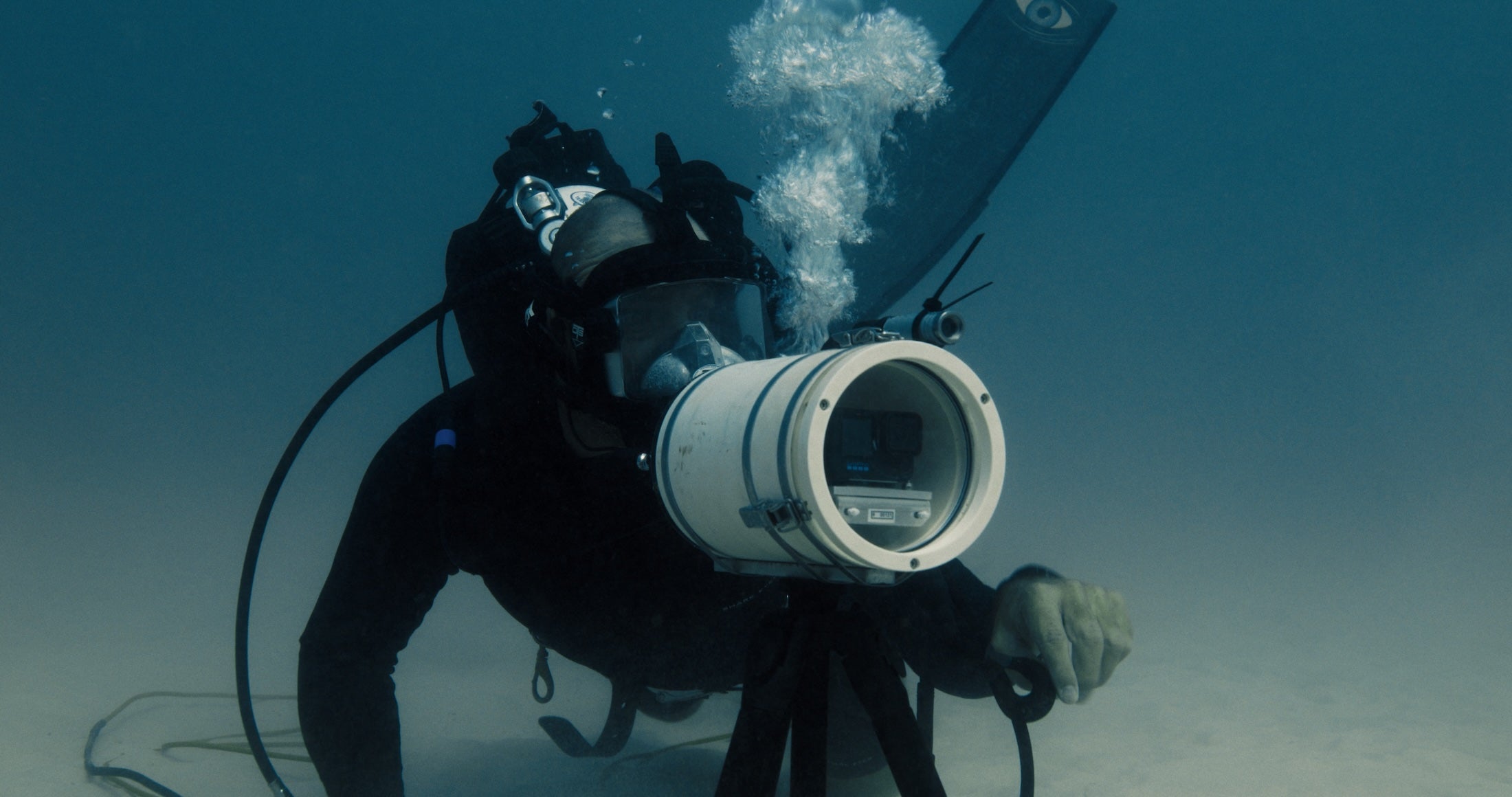
And we've actually self-funded two scientific trips, as the small company that we are, two week trips in WA to go and test if we can put a number, or actually get a formal number, that we can tell people: this is the percentage that this works or not. And we know that this is not a foolproof solution. But we really feel that it is something and like I said, this has been proven up in nature through evolution and adaptation over a millennium. But there's a big difference between trying to put a number on the psychological trickery of a shark and actually getting that science done. And so yeah, that's where we're at with it at the moment.
NADIA: And you're trying, and I think that's brilliant. Shanan, so lovely to talk to you. As I said, I've had a few people say you need to talk to this man. So thank you for coming on this morning.
Shanan Worall is the founder of Shark Eyes, a Western Australian company developing and scientifically testing shark deterrent decals. Shanan also witnessed and rendered assistance at a tragic shark attack in 2014.
Frequently Asked Questions
What are Shark Eyes shark deterrent decals?
Shark Eyes are decals applied to surfboards, fins, and watercraft that use eye spot patterns inspired by nature. The concept is based on biomimicry, the same defensive adaptation used by hundreds of animal species for millions of years. The theory is that displaying prominent eye spots on your equipment may take the element of surprise away from a shark, potentially changing its behaviour before an attack occurs.
What is the science behind eye spots as a shark deterrent?
The foundation comes from research into biomimicry and apex predator behaviour. A landmark four year study by Professor Neil Jordan of Taronga Zoo tested eye spot patterns on cattle in Botswana to deter lion predation. Of 835 cattle, not one animal painted with eye spots on its rump was killed by lions, compared to 15 unpainted animals killed during the same period. Shark Eyes draws on this and related research to explore whether the same principle applies to shark behaviour in the ocean.
Has Shark Eyes shark deterrents been scientifically tested?
Yes. Shark Eyes has self-funded two scientific field trips in Western Australia, each spanning two weeks, specifically to gather data on how sharks respond to the eye spot patterns. The goal is to produce a formal, quantified result, an actual percentage effectiveness figure, rather than rely on anecdotal evidence alone.
Is Shark Eyes shark deterrent a foolproof?
No. Shark Eyes does not claim to be a 100% guarantee against shark attack. It is designed as a risk reduction tool based on sound biological principles, one layer of protection among several sensible precautions. No single deterrent eliminates risk entirely.
Why is shark deterrent research important right now?
Australia has recorded four fatal shark attacks in 2026 to date, including two in Western Australia. With more Australians returning to the water and shark activity increasing near coastal areas, interest in evidence-based deterrent options has never been higher. Shark Eyes is an Australian company actively conducting its own field science on decal-based deterrents.


Share:
The Benefits of Surf Apnea Training
What the Science Community Says About Shark Eyes Shark Deterrents