
- by Shark Eyes Team
What the Science Community Says About Shark Eyes Shark Deterrents
- by Shark Eyes Team
Shark Eyes began with watermen noticing that sharks behave differently when they know they are being watched. The idea has since drawn support from some of the most credible voices in Western Australian science and ocean industry. Here is what they have to say, in their own words.
Shark Eyes founder Shanan Worall on the science behind visual shark deterrents.
Peter Klinken served as Chief Scientist of Western Australia from 2014 to 2025 and monitored and reviewed the State Government's SMART drumline trial. He shared this personal note about Shark Eyes:
"Over the past year I've been talking to Shanan Worall about our shared experiences as divers and surfers with large sharks, especially Great Whites. These discussions included potential ways to mitigate against shark attacks.
As you may remember, I monitored and reviewed the State Government's SMART drumline trial, so I have a real interest in the science involved in understanding shark movement, behaviour and the impacts on interactions with humans.
I was intrigued by Shanan's idea of Shark Eyes and the possibilities that a relatively simple solution might bring. I must admit that I was somewhat surprised to learn that large "eye" patches painted on cattle appears to have been effective in reducing attacks by another ambush predator viz lions.
I have encouraged Shanan to generate as much scientific data as possible to evaluate the effectiveness of Shark Eyes. He recently informed me that pilot studies in the Abrolhos, that he funded, have been very encouraging. That study now needs to be expanded and Shanan is seeking support to fund the project."

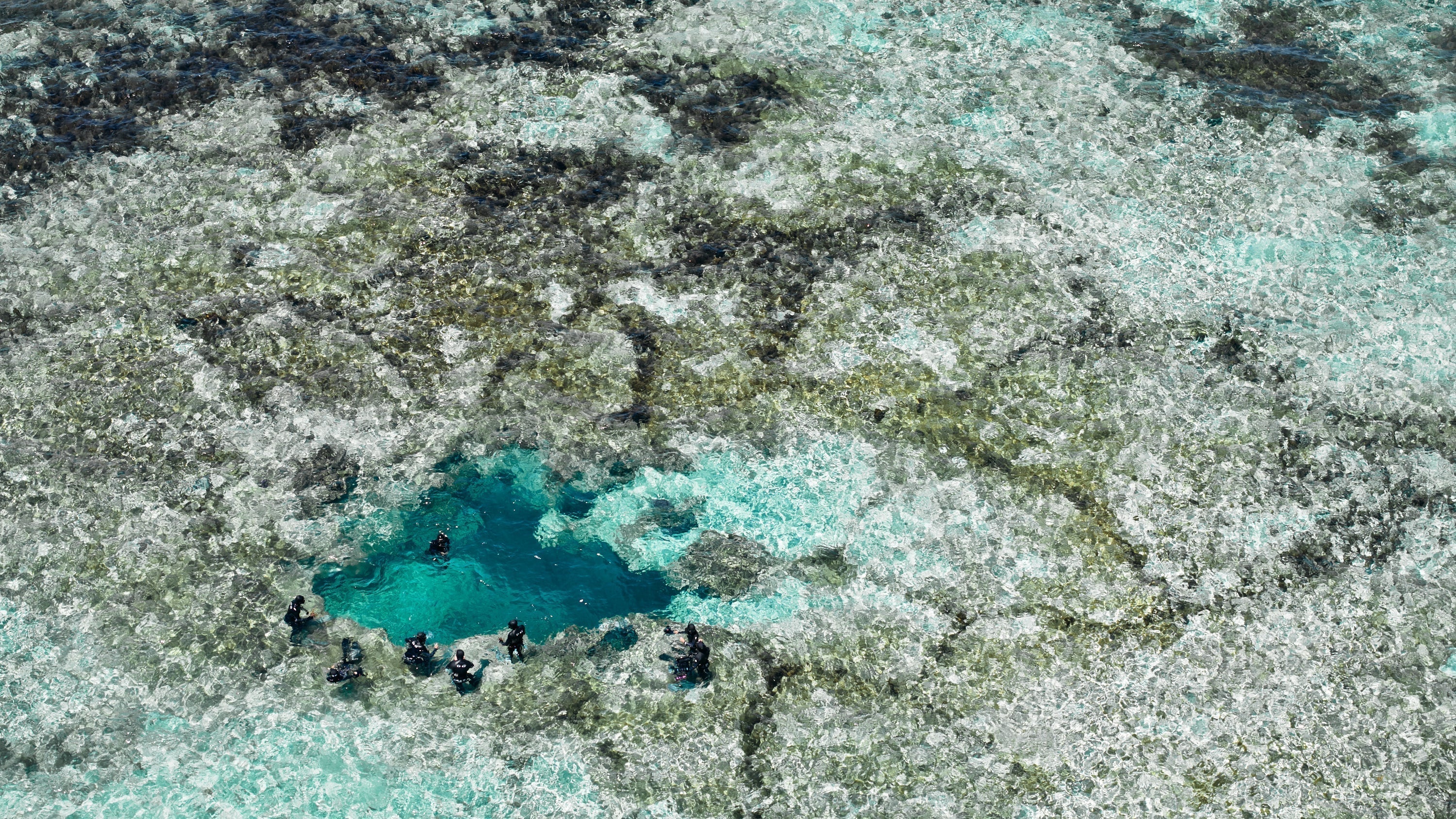
On location, where the self funded Shark Eyes pilot studies took place.
Shark Eyes has been recognised by author and world leader in biomimicry research, Jay Harman of Pax Scientific, as an outstanding example of inspiration from nature. Jay's work has been featured in numerous documentaries including King Charles III's film Harmony.
"Innovative biomimicry technologies such as Shark Eyes can bring international attention to the West Australian National Sciences Community and push WA to the forefront of biomimicry research."

"Of all the Shark Deterrents products that are on the market, I believe the Shark Eyes products have the best chance of changing the outcome to a more favourable conclusion of a confrontation and has no downsides. Unlike shark deterrents that use magnetic and electric fields that have been shown to attract Sharks in the first place.
As Chairperson of the AIAWA Industry and AUF Spearfishing, we would encourage the government or any entity to financially support the Shark Eyes initiative that will help the wider recreational ocean user."

Shark Eyes has self funded two scientific field trips in Western Australia to test how sharks respond to eye spot patterns, with pilot studies returning very encouraging early results. The goal is a formal, quantified effectiveness figure to support the anecdotal evidence and the next step is expanding that study with the aim of keeping our loved ones safe.

Field testing footage: sharks engage the plain canister and deter away from the Shark Eyes canister.
Read more about the research on our shark deterrent science page, or explore the Shark Eyes deterrent range.
Voices from science and ocean industry who have spoken in support of Shark Eyes include Peter Klinken, Chief Scientist of Western Australia from 2014 to 2025, Jay Harman, founder of Pax Scientific and a world leader in biomimicry research, and Arnold Piccolli, Chairperson of the Australian Underwater Federation Spearfishing and the Abalone Industry Association of Western Australia. They join the ocean professionals, marine scientists and watermen already backing Shark Eyes.
Peter Klinken, who monitored and reviewed the WA State Government's SMART drumline trial, described being intrigued by the possibilities of a relatively simple solution, noted the effectiveness of eye patches painted on cattle against lions, and said the self funded pilot studies at the Abrolhos have been very encouraging. He has encouraged Shark Eyes to generate as much scientific data as possible.
Shark Eyes has self funded two scientific field trips in Western Australia to gather data on how sharks respond to eye spot patterns. The pilot studies have returned very encouraging results, and the study now needs to be expanded. Shark Eyes does not claim to be foolproof. It is a risk reduction tool based on biomimicry, the same defensive adaptation used by hundreds of species in nature.

Share:
Shark Eyes on ABC Radio South West: Shanan Worall Explains the Science Behind Visual Shark Deterrents
He Helped Save His Mate From a Great White. Then He Built Shark Eyes.