


Founder
Shanan Worrall
- Discipline
- Big wave surfer and commercial diver
- Based
- Esperance, Western Australia
Shanan was born in Esperance, Western Australia in 1978, into a family of keen surfers. He started surfing, fishing and spearfishing at six. At seventeen he began working the water as an abalone diver and deckhand, and he still dives commercially for specimen shells today.
His abalone career ended in 2013 after a run of events in Western Australian waters left him with post traumatic stress disorder and severe anxiety about the ocean. He struggled to get back in the water for a year.
In October 2013, diving 180km east of Esperance, Shanan and two colleagues gave life saving first aid to fellow abalone diver Greg Pickering after a white shark attack, four hours from town, then got him to hospital. That same year he lost someone he loved to a fatal attack at Gracetown, and had several unwanted encounters of his own while spearfishing and surfing.
Shanan accepts that for most people a shark attack is not something to lose sleep over. For him, and for the many others who work and play in the water every day, the threat is a very real thing.
His honours include the WSL Tube of the Year at the 2017 Big Wave Awards, Billabong Big Wave Awards finalist in 2017, an Oakley Big Wave Award nomination and finalist placing, three wins at the Esperance Deep Sea Angling competition, and work as a One Ocean International Trainer and luxury fishing charter skipper.
Big wave surfer, spearfisherman
Shane Ackerman
- Based
- Wollongong, New South Wales
Shane rides the heaviest waves in the country, out of Wollongong. He is the subject of the Keith Malloy film Astronaut in the Ocean, and works to fund his own trips. He spearfishes as well.
Crayfisherman, surfer and lifelong waterman
Oska Caldwell
- Discipline
- Surfing, spearfishing and crayfishing
- Based
- Kalbarri, Western Australia
Oska grew up on Quobba Station and went to the ocean rather than the land. He now lives in Kalbarri, surfing the heavy water along that coast, and is a crayfisher and a spearfisher.
Abalone diver and spearfisher
Greg Pickering
- Discipline
- Freediving champion, twice a shark attack survivor
- Based
- South Australia and Western Australia
I still enjoy diving and remember often the wonderful things that I have seen while in the water. It has truly been a privilege to have spent the majority of my life in the sea.
Greg started spearfishing and freediving in 1970 and has fished commercially for abalone across South Australia and Western Australia for more than 35 years. He has had over twenty encounters with great white sharks and has survived two attacks.
The first came in 2004 while spearfishing off Cervantes, a bronze whaler bite to the lower leg. He was back in the water three months later.
The second came while abalone diving 160km east of Esperance. Bitten around the head and shoulder, he made the surface from fifteen metres and was helped into a boat by Callan Turner. Andrew Rowe and Shark Eyes founder Shanan Worrall were nearby and came across to assist. They met an ambulance on a remote dirt road 110km from Esperance, reached Esperance hospital, then flew to Perth with the Royal Flying Doctor Service. Greg spent ten hours in surgery at Royal Perth. A 19mm tooth fragment was removed from his right eye and later identified as coming from the rear of a white shark jaw.
He is a former Australian Spearfishing Champion, won the South Australian titles in 1978 and the South African title in 1994, holds three world spearfishing records for blue water gamefish, and has competed at two World Spearfishing Championships.
Water cinematographer
Andre Rerekura
- Discipline
- Underwater camera operator, commercial diver, shipwreck hunter
- Based
- Western Australia
Andre is an underwater camera operator and commercial diver. He has spent his career working in remote and often risky corners of the ocean, and he hunts shipwrecks.
He and Nush Freedman are among the most in demand water camera operators in Australia. Together they have worked on some of the largest and most complex ocean documentaries ever filmed here, including productions for the BBC, National Geographic and Netflix.
Natural history filmmaker
Nush Freedman
- Discipline
- Water camera operator and conservationist
- Based
- Western Australia
Nush is a natural history filmmaker and a conservationist. She has spent years filming sharks, among them tigers, bulls and whites.
She and Andre Rerekura are among the most in demand water camera operators in Australia. Together they have worked on some of the largest and most complex ocean documentaries ever filmed here, including productions for the BBC, National Geographic and Netflix.
Ocean photographer
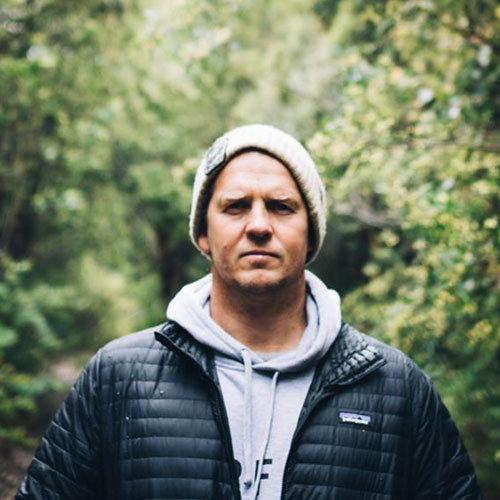
Russell Ord
- Discipline
- Big wave and water photography
- Based
- Margaret River, Western Australia
Russell Ord, known as Ordy, is a celebrated international photographer with a unique connection to the ocean. From Margaret River in Western Australia, he has earned worldwide recognition for his big wave photography, capturing the organic and often bewitching beauty of the sea in motion.
Venturing up to 15km offshore in the Southern Ocean and swimming into some of the biggest waves on the planet, Russell shoots distinctive images from inside the wave impact zones. Tens of surfing magazine covers and a slew of international awards, including the Oakley Big Wave Award, the International Loupe Award and IPA 2016 Professional Sports Photographer of the Year, are a testament to the quality and originality of his work.
A fireman by trade, Russell came to photography fifteen years ago after injuring his knee surfing. Rather than sit on the couch he picked up a camera and spent his days at the beach shooting friends in the waves. His work now extends into landscape, lifestyle and portraiture, with clients including Aston Martin, Tourism Western Australia, Quiksilver, ESPN, Red Bull and Billabong. He also shot the poster image for the 2013 Australian film Drift.
Waterman and commercial diver
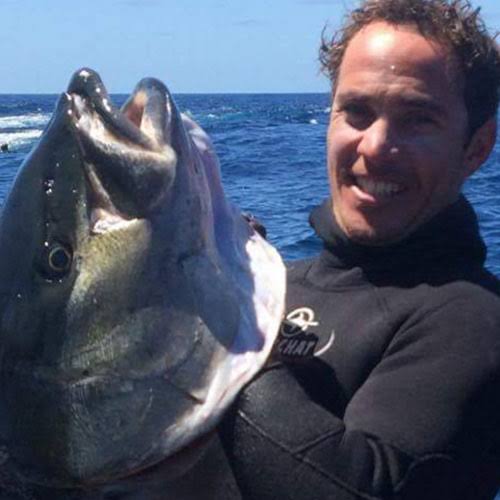
Julian Hansford
- Discipline
- Commercial diver and spearfishing champion
- Based
- Australia and New Zealand
Julian is a commercial boat skipper and career diver whose work spans free diving for abalone in New Zealand, air diving for abalone in South Australia, ADAS Level 3 construction diving in both countries, beche de mer diving in Queensland and tuna harvest diving at Port Lincoln. He is a Diver Medical Technician and a seven times New Zealand spearfishing champion.
Ocean and landscape photographer
Andrew Semark
- Discipline
- Photography
- Based
- South West, Western Australia
Andrew is a photographer born and raised in the South West, working across landscape, travel and ocean art. He shot the feature documentary Facing Monsters with slab surfer Kerby Brown, and published a hardcover book of the same name.
Professional surfer
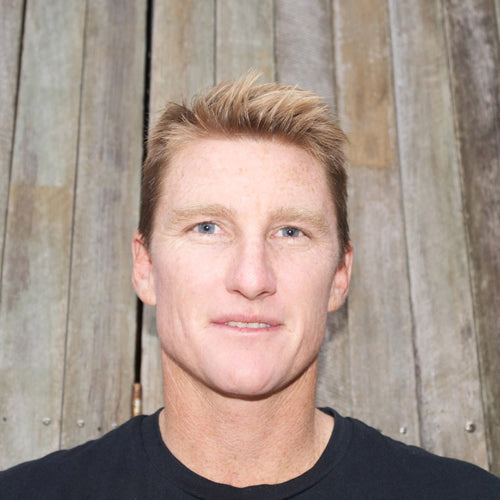
Justin Holland
- Discipline
- Stand up paddle, big wave and shortboard surfing
- Based
- Emerald Beach, New South Wales
Justin grew up on the east coast of Australia at Emerald Beach, started surfing at five and has been in the water ever since. He had early success as a junior shortboard surfer on the Billabong junior series, then competed in WQS events around Australia and the world.
He has always loved big waves. His first trip to Hawaii came in 1999, where his second day on the rock landed him out at twenty foot Waimea Bay. He has returned every year since, often twice a year, and has taken on Peahi at Jaws on Maui. He came to Western Australia with Jamie Mitchell to tackle Cow Bombie on what some called the biggest swell to hit the state in decades.
His results include Australian SUP Surfing Champion in 2012, second at the 2012 ISA SUP Surfing titles in Peru, third on the Stand Up World Tour in 2015, 2015 Rotto Classic champion, and winner of the Oakley Biggest Wave of the Year Australia for 2015 and 2016.
Underwater cinematographer
Steve Wall
- Discipline
- Cinematography, underwater camera unit
- Based
- Iceland
Steve is an award winning Australian filmmaker specialising in underwater camera unit and remote area operations, with more than ten years in the water unit. His credits include Planet Earth III.
Career diver
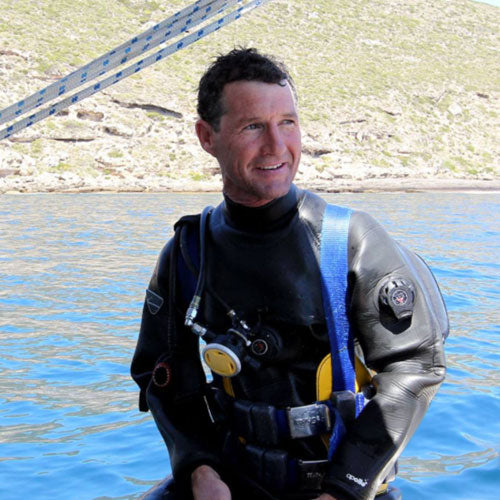
Marc Payne
- Discipline
- Abalone diving and white shark research
- Based
- South coast of Australia
Marc Payne has spent a lifetime underwater in some of the most shark rich waters in the world, off the south coast of Australia. He has survived thirteen unprovoked interactions with great white sharks while abalone diving.
He has been involved in white shark research for the last decade, has made countless observations of sharks in the wild, and is a strong advocate for a non invasive approach to white shark research that limits human impact on shark behaviour.
Marine scientist
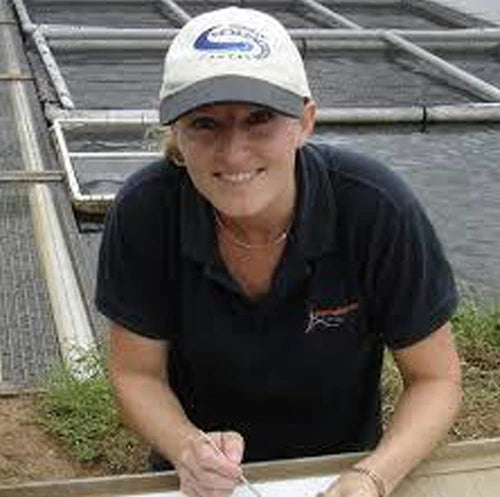
Dr Kristen Perks
- Discipline
- Research scientist, fish endocrinology
- Based
- Esperance, Western Australia
Raised in Esperance, Western Australia, Kristen has spent years travelling Australia and the world surfing, diving and fishing. Her love of the ocean was the driving force behind her career in marine science.
Dr Perks is a research scientist specialising in fish endocrinology. She completed her studies at the National Centre for Marine Conservation and Resource Sustainability at the University of Tasmania. She has worked in the fish industry for over ten years, conducting research and working with both government and commercial fisheries.
Foiler and photographer
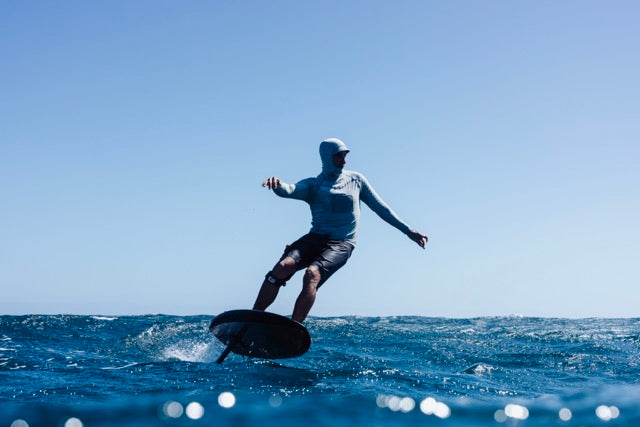
Larry Foiler
- Discipline
- Foiling and photography
- Based
- South West, Western Australia
Shannon, known across the foiling world as Larry Foiler, has been foiling the South West since 2018. He is a professional photographer, and his work runs across Foil Drive's site and print media. He also founded LfSupply, building travel and protection gear for foil kit after finding nothing on the market that did the job.
Surfer and spearfisher
Grayson Hinrichs
- Discipline
- Surfing and spearfishing
- Based
- Bondi, New South Wales
Grayson is an ISA World Junior Champion out of Bondi and a former NSW spearfishing champion. He splits his time between competitive surfing, spearfishing and remote trips along the Australian coast.
Fisherman, surfer and filmmaker
Jackson Coffey
- Discipline
- Fishing, surfing and film
Jackson runs the Coffey Break channel, built around exploring the edges of Australia in search of big fish, good waves and country that has not been worked over.
Professional underwater photographer
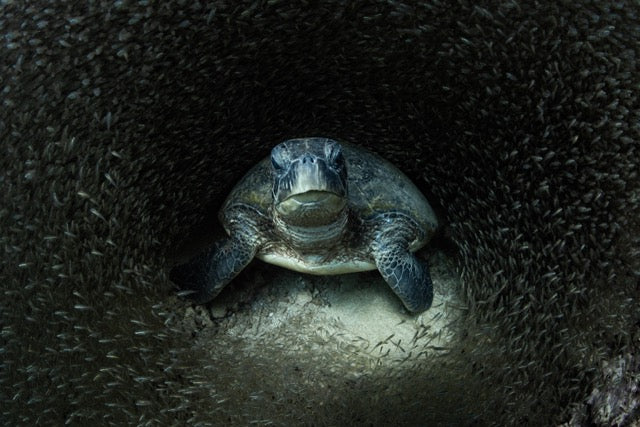
Ocean Aimee
- Discipline
- Underwater photography
- Based
- Exmouth, Western Australia
Aimee is an underwater photographer based in Exmouth on the Ningaloo Reef. She was named Ocean Photographer of the Year in 2021, and works on whale shark and humpback tours as well as leading trips to swim with blue and sperm whales.
Wind surfer
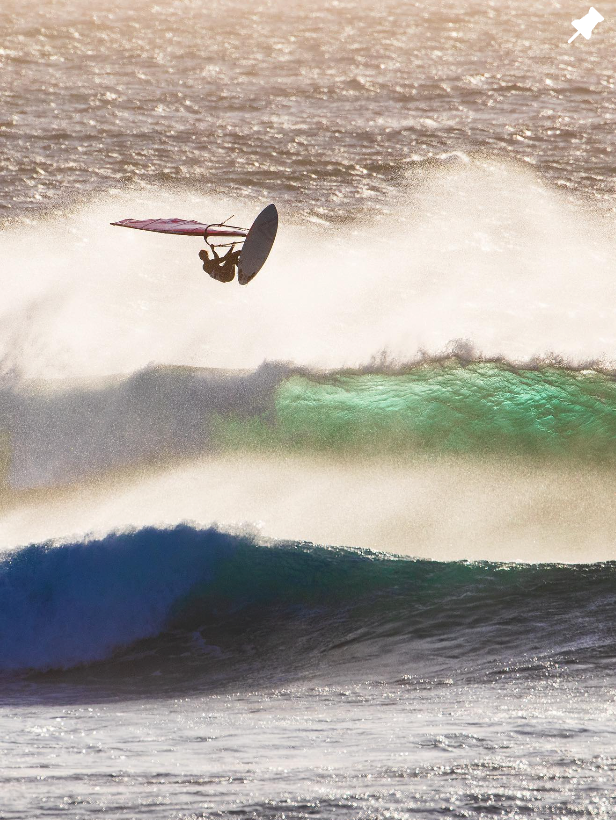
Jake Ghiretti
Jake won the U21 Pro Junior Men at the Oceania Youth Wave Titles at Geraldton in January 2025. He has since placed second in the Pro fleet at the Margaret River four star event.
SHARK EYES DETERRENTS
What the ocean professionals say
Ten people who work the water for a living, on why they trust Shark Eyes Shark Deterrents.
Marine Biologist
Brinkley Davies
It’s through this understanding of the various factors in the shark space that I consider Shark Eyes a valuable tool for safety, especially as a versatile and accessible tech that everyone can adopt, no matter their activity in the water.
Abalone diver of 45 years, champion spearfisherman. World record holder for a 46.2kg Spanish mackerel
Greg Pickering
I think being able to convince a potential predator that you can see them is definitely something in your favour.
Acclaimed underwater camera operator, commercial diver, shipwreck hunter
Andre Rerekura
It’s this experience that gives me trust that Shark Eyes keeps me safer in the water.
Natural history filmmaker, conservationist
Nush Freedman
It’s one of the simplest tools available to us to protect our space in the water.
Commercial diver, spearfisherman, big wave surfer and specimen shell collector
Shanan Worrall
There is just too much anecdotal evidence around this being an effective means of defense to ignore.
Spearfishing veteran. 9x Australian Champion
Ian ‘Pucko’ Puckeridge
As soon as you've got eye contact on them again, they disappear back into the gloom. They're definitely affected by eye contact.
Marine Scientist
Dr Kristen Perks
As a marine scientist, researching the relevant scientific literature, it simply makes sense that a visual deterrent for sharks has merit and is worth researching further.
Big wave surfer, spearfisherman. Wollongong, New South Wales
Shane Ackerman
Sharks are ambush predators. The way they attack is via the element of surprise, so it makes a lot of sense to me to use a set of eyes to defend against that.
Crayfisherman, surfer and lifelong waterman
Oska Caldwell
I’ve seen eye contact change behaviour so many times with both sharks and fish, so it’s good peace of mind for me to have Shark Eyes watching my back, whether it’s surf or dive days.
Founder of Ocean Heroes, Director of Jock Clough Marine Foundation
Sam Moyle
Amongst the challenges of shark mitigation, I consider Shark Eyes to be a really valuable tool in keeping people safer in the water.
